UniWare warehouse management system

Increase your efficiency with our warehouse management processes

UniWare is an advanced warehouse management system that ensures maximum transparency and efficiency in your logistics center. Our solution optimizes your warehouse resources, guarantees smooth order picking and manages your stock efficiently and reliably. Thanks to the integrated material flow and the standardized PLC interface, you benefit from the use of all standard transport systems on the market.

UniWare offers:

  • Warehouse management system (WMS)
  • Material flow control system (MFS)
  • System visualization (VISU)

Advantages with Unitechnik

Integrated system:
LVS+MFS+VISU

Virtual commissioning

One-time
site license

Unterstützt individuelle Prozesse

  • Maximum transparency
    Full control and real-time overview of all logistics processes
  • Flexible and mobile
    UniWare accompanies you stationary and mobile, no matter where you are
  • Global and versatile
    Multi-client capable, multilingual and group-capable for worldwide use
  • Modular and adaptable
    A comprehensive modular system for automated and manual warehouses
  • Seamless integration
    Future-proof thanks to a flexible interface design that enables the connection of any system
  • Cross-industry
    Ideal for industry, retail and logistics service providers
  • Innovative energy efficiency
    Intelligent strategies to minimize energy costs and promote green logistics
  • Fast commissioning
    Intensive laboratory tests and emulations ensure smooth commissioning and training
  • Future-oriented
    Validated by Fraunhofer IML, flexible to use and investment-proof
  • Expert-driven
    Joint design with our experts for your customized solution

Range of functions

  • Many AI-based functions such as replenishment strategies, order planning, package optimization, etc.
  • Comprehensive goods receipt and warehouse functions such as notification, putaway, stock transfer, replenishment and inventory
  • Efficient order and shipping management: from order management to loading
  • Management of articles, stocks and master data
  • Transport management, bin management and forklift guidance system
  • Quality inspection, BBD management, serial number and batch management, weight control
  • Large portfolio of additional functions from cross-docking to customs clearance and personnel planning
  • UniWare-MFS is a UniWare module for material flow control
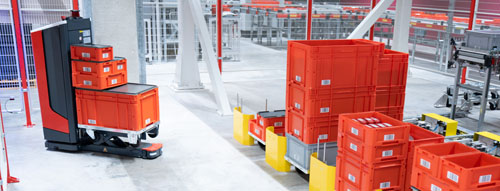
  • Operation of transport and storage systems (storage and retrieval machines, electric monorail system, conveyor technology, shuttle system, etc.)
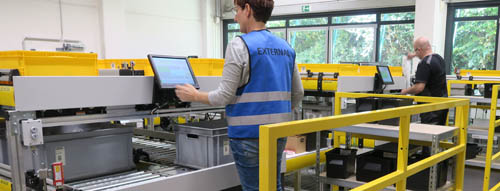
  • Control of manual transport and picking systems
  • Intelligent and efficient route planning
  • UniWare-VISU integrated in UniWare-LVS
  • Display of automatic transport systems from Unitechnik
  • Uniform operating concept for control station and visualization
  • Connection to third-party systems possible
  • Stepless zooming
  • Intelligent status display of all devices and areas
  • Real-time animation of transport systems and transport units

User interface

Transport unit management

Visualization

User administration

Picking dialog

Transport dialog forklift

Picking dialog forklift

Interfaces

ERP interfaces

  • SAP ERP (WM, EWM, S/4HANA, R/3)
  • Microsoft Dynamics BC
  • Infor LN
  • proALPHA
  • HIW Returns
  • Customized ERP interfaces

Other interfaces

  • Unitechnik control system (PLC)
  • Skypod from Exotec
  • AutoStore
  • FTS/AMR
  • Heidler shipping systems
  • Further interfaces to storage and conveyor systems

Are you interested in the UniWare warehouse management system?

Download the free brochure now:

Lagerverwaltungssystem UniWare
Prospekt
Lagerverwaltungssystem UniWare
download

References and case studies with LVS UniWare

Ethiopian Airlines

Planning and realization of an airfreight center for 600,000 t of freight per year, partly refrigerated, automated high-bay warehouse for 1000 ULDs, 4ETVs, man. Warehouse for 8,500 pallets

Spirit Air Cargo Handling

Automated ULD warehouse for 131 20ft containers 2 storage and retrieval machines 11 lowerable work stations X-Way-Mover for flexible handling

King Shaka International Airport

Automated ULD cargo warehouse with 202 compartments, partially refrigerated, pallet warehouse, 250 m express sorting loop, X-Ray machines for ULDs, pallets and parcels

Your contact persons

Stefan Blauel

Head of Information Technology

T +49 2261 987-501
E-Mail | vCard

Ingolf Mix

IT-Consulting and Sales UniWare

T +49 2261 987-403
E-Mail | LinkedIn | vCard

Matthias Spies

IT-Consulting and Sales UniWare

T +49 2261 987-358
E-Mail | LinkedIn | vCard

Worth knowing

The ideal way to replace your WMS

Is your company facing the challenge of changing its warehouse management system (WMS)? Unitechnik offers insights into current industry trends and a customized roadmap to WMS replacement based on a detailed survey of more than 50 warehouse operators. Find out which factors are crucial when deciding on a new WMS and how you can make the transition smooth.

Find out the details here

Information on the Log4j vulnerability

Unitechnik informs: The software products UniWare and UniCAM are not affected by the Log4Shell vulnerability in Log4j.

A detailed statement and details on the security of our systems can be found here.

Efficient warehouse management with WMS and WMS

WMS and WMS: the difference and their possible applications

Warehouse management systems (WMS ) and warehouse management systems (WMS) perform similar tasks in warehouse logistics, but differ in detail. The WMS focuses on inventory management, the organization of storage units and the core functions of intralogistics, while the WMS also controls and optimizes the overarching logistics processes. Both systems enable efficient control of warehouse processes.

Area of application and synergy effects

A WMS is particularly suitable for the precise management of warehouse stocks, storage locations and restricted storage areas. It provides real-time data and supports the automation of warehouse management using barcode scanners and RFID technology. The WMS , on the other hand, coordinates extensive processes such as sequencing, cross-docking and fleet management and provides dashboards for real-time monitoring.

Advantages of use for warehouse processes

WMS and WMS increase efficiency through better use of warehouse capacity and optimized control of material flows. The WMS provides inventory information, while the WMS also uses this for shipping and fleet control. Technologies such as RFID and artificial intelligence (AI) also improve the flow of data, which is particularly beneficial for FIFO and LIFO strategies.

Oops, an error occurred! Code: 2026011219035684be04c7

Seamless material flow automation

Material flow system (MFS) for an optimized flow of goods in the warehouse

A material flow system (MFS) enables automated control and monitoring of the material flow within the warehouse and ensures that goods are transported smoothly through all warehouse areas - from goods receipt to storage and dispatch. By using a modern MFS , all material movements are documented and visualized in real time.

This not only ensures a more efficient organization of the flow of goods, but also reduces bottlenecks and minimizes the manual effort involved in inventory management and picking. An MFS is therefore an essential building block for future-proof and scalable warehouse management that maps all processes clearly and automatically.

Seamless integration of the MFS into automated and manual processes

The material flow system can be integrated into both fully automated logistics centers and warehouse environments with manual processes. In highly automated warehouses, the MFS takes over the control of continuous conveyor technology, storage and retrieval machines, robots and automated guided vehicles (AMR) and ensures that goods are transported along the optimal routes. In hybrid environments, where both manual and automated processes take place, the MFS supports the interaction between man and machine through the use of barcode scanners, RFID technology and an intuitive user interface.

This flexibility and adaptability makes the MFS an ideal solution for companies that require accurate, real-time inventory control and warehouse management with maximum efficiency.

Advantages of material flow automation for logistics centers

Automating the material flow with an efficient MFS offers companies considerable advantages. On the one hand, warehouse capacity is used optimally as goods are placed and moved efficiently. On the other hand, throughput times are significantly reduced, as an MFS reacts to changes in real time and thus enables high flexibility in warehouse logistics. Thanks to continuous real-time data processing and analysis, warehouse strategies can be dynamically adapted to new requirements, ensuring shorter shipping times and precise inventory management. This leads to a significant increase in efficiency and flexibility - a clear competitive advantage for logistics centers.

For companies that want to improve their warehouse processes in a targeted manner and develop strategies tailored to individual challenges, professional logistics consulting offers the opportunity to implement sustainable and innovative solutions.

With the introduction of material flow automation , companies achieve comprehensive optimization of their warehouse processes and significantly increase their reaction speed to changing market requirements.

MES and WMS: integration into modern warehouse management systems

Process optimization through the combination of MES and WMS

The combination of Manufacturing Execution System (MES) and Warehouse Management System (WMS) enables efficient control and optimization of the entire production and warehouse processes. While the MES monitors the production process and provides real-time data on production, the WMS coordinates the material flow and inventory management. By linking the two systems, stock levels and production processes can be better coordinated, resulting in reduced throughput times and more precise planning.

Seamless data synchronization between warehouse and production

Seamless data synchronization between MES and WMS creates transparency throughout the entire supply chain. Current stock and production data is transmitted in real time, enabling rapid adjustment to fluctuations in demand. This allows production to react flexibly to stock levels and the warehouse can be optimally adapted to the needs of production. This connectivity improves responsiveness and enables forward planning, which is particularly important for just-in-time strategies.

Warehouse management software for efficient inventory management

Precise inventory management and monitoring

Modern warehouse management software enables companies to precisely record and monitor stock levels in real time. Using technologies such as barcode scanners and RFID, the entire material flow in the warehouse is automatically recorded and documented. This means that companies always have an up-to-date and detailed overview of their stock levels and can efficiently manage safety stock to avoid out-of-stock situations or overstocking. This real-time transparency makes warehouse management considerably easier and enables precise stock control. In addition, precise inventory monitoring promotes optimized use of warehouse space, as overstocking can be avoided and warehouse resources can be used optimally. This precise control creates a basis for effective warehouse management that can react flexibly to fluctuations in demand.

Automated inventory reporting and error reduction

Advanced warehouse management software automates the creation of regular inventory reports and assists with stocktaking. By automating these processes, the susceptibility to errors is minimized, which is particularly advantageous for large inventories. Manual entries are largely eliminated, reducing the risk of input errors and reducing administrative effort. The software can generate detailed reports on stock trends, stock turnover and stock ranges, allowing management to make informed decisions on how to optimize stock levels. These reports help to identify trends at an early stage and adapt the warehouse strategy accordingly. Greater stock accuracy and minimized errors increase the efficiency of the warehouse, which not only leads to improved delivery capability but also increases customer satisfaction.

A comparison of supply chain software and warehouse management software

CriterionSupply chain softwareWarehouse management software
Main focusOptimization of the entire supply chain and logistics processesPrecise management and control of stock levels
FunctionsInventory management, transportation planning, returns management, shipping coordinationInventory tracking, safety stock, documentation of stock movements
Typical areas of applicationInbound and outbound processes, fleet management, cross-dockingInventory monitoring, safety stock management, carrying out inventories
AdvantagesEfficient control of the flow of goods and optimization of the entire logistics chainAccurate inventory data and improved control over stock levels

Combined use:

The combination of supply chain and warehouse management software offers an integrated solution that ensures cross-location inventory monitoring and increases efficiency throughout the logistics chain. The two systems complement each other perfectly, as they ensure an overview of stock movements and global inventory management as well as the handling and coordination of logistics processes.

Future-proof warehouse management with UniWare

Flexible warehouse management system for maximum transparency

UniWare is a powerful, modular warehouse management system that offers companies a scalable solution for their warehouse management and guarantees long-term investment security. The platform-independent software ensures maximum transparency in logistics centers and enables precise management and monitoring of warehouse stock - mobile and stationary. Thanks to the integrated material flow computer (MFR) and the standardized PLC interface, UniWare can be easily connected to standard warehouse and conveyor technology, ensuring efficient use of all warehouse resources.

UniWare is multi-client capable, multilingual and can be used across all industries. The intuitive user interface and integrated visualization offer simple operation, with all warehouse management and material flow processes mapped in uniformly designed masks. Thanks to the flexible interface architecture, UniWare can be seamlessly connected to ERP systems such as SAP, Microsoft Dynamics or proALPHA , ensuring end-to-end connectivity throughout the entire supply chain.

With UniWare, companies from industry, trade and logistics services benefit from a license-free system that maps both standardized and individual business processes. The solution is ideal for automated logistics centers and can be flexibly integrated into manual warehouses, making it the ideal choice for corporations and medium-sized companies.

Advantages of real-time visualization in the warehouse control center

Real-time overview

UniWare provides you with a graphical real-time view of all warehouse and transport processes at all times. UniWare-VISU can be called up on mobile and stationary devices and offers a continuously zoomable visualization for a quick overview.

Automated material flow monitoring

Thanks to RFID and barcode technology, material movements are automatically recorded and visualized. This allows stocks and flows of goods to be documented precisely and seamlessly.

Early bottleneck detection

Visualization enables bottlenecks and faults to be detected quickly. Problems become visible immediately so that you can take action in good time to avoid downtime.

Optimized resource planning

The UniWare dashboards provide detailed reports on stock development, warehouse utilization and order situation. With this real-time data, you can flexibly adapt your warehouse strategy and deploy resources in a targeted manner.

Strategic warehouse management

Visualization is not just a monitoring tool, but also supports strategic decisions. Transparency in the warehouse control center allows you to optimize your processes and increase overall productivity.

User-friendliness and scalability

UniWare offers an intuitive user interface and is flexibly scalable. The warehouse management software adapts to growing requirements and integrates seamlessly into existing IT systems for long-term investment security.

Increased efficiency through the use of artificial intelligence (AI) in warehouse management software

  • Optimized replenishment strategies
    AI analyses stock movements in real time and calculates optimal replenishment quantities and times. This avoids bottlenecks and increases delivery capacity.
  • Intelligent order forecasting
    UniWare uses machine learning to recognize patterns in the order situation and creates a model that can be used to predict the order load for the next few days. This enables better planning of logistics staff for picking and shipping.
  • Forecasts for stock movements
    UniWare uses historical data to create reliable forecasts, which helps companies to optimally plan warehouse capacities and manage seasonal fluctuations.
  • Data-based analysis and pattern recognition
    AI algorithms identify trends and patterns in stock levels and order fulfillment, enabling continuous efficiency improvements.
  • Automated process control
    AI-supported automation minimizes administrative effort and reduces sources of error, allowing processes to run error-free and efficiently.
  • Increased stock accuracy
    The continuous monitoring of stock levels by AI ensures a high level of accuracy and reduces both overstocks and stock shortages.
  • Cost efficiency in the warehouse
    UniWare reduces storage costs through optimized inventories and at the same time increases customer satisfaction through precise deliveries.
  • Flexibility and adaptability
    The AI adapts dynamically to new requirements, allowing companies to react quickly to market changes and trends.

Mobility in warehouse management

UniWare as warehouse management and material flow software on mobile devices

UniWare enables companies to control warehouse processes flexibly and on the move - independently of stationary systems. The software can be used on mobile devices so that employees can record and update warehouse data directly on site. Whether inventory, picking or stock control - UniWare supports seamless and efficient handling of processes without losing valuable time switching between warehouse areas and stationary terminals.

Real-time synchronization of all stock changes increases stock accuracy and reduces sources of error. With the mobile UniWareclient, employees can scan barcodes, locate items and document stock movements immediately. Mobile availability creates flexibility in warehouse operations and ensures that companies can make optimum use of their resources - whether in large logistics centers or smaller, decentralized warehouses.

With UniWare , warehouse management is not only more efficient, but also future-proof, as the system reacts flexibly to changing requirements at all times.

FAQs on warehouse management systems

A WMS focuses on inventory management, efficient control of material flows and core logistics processes in the warehouse. A WMS goes beyond this and offers additional functions for the coordination and optimization of higher-level processes such as returns management and cross-docking.

The UniWare warehouse management software (WMS) has a modular structure and enables efficient inventory management and order planning through AI-supported replenishment strategies and package optimization. The main functions include goods receipt and warehouse processes such as notification, putaway, stock transfer and inventory, as well as comprehensive order and dispatch management. With an integrated material flow computer (MFR) and a PLC interface, UniWare supports the use of standard warehouse and conveyor technology. The UniWare MFS module controls both automated and manual transport processes, while UniWare VISU offers real-time visualization of warehouse movements - mobile and stationary.

UniWare offers flexible warehouse management that adapts to the individual requirements of your business. The system enables precise inventory management, optimizes warehouse resources and ensures maximum transparency of all warehouse movements. Thanks to its platform-independent architecture, UniWare can be used in mobile and stationary applications, which increases flexibility in warehouse operations. The intuitive user interface and integrated visualization make UniWare the ideal solution for efficient control of picking processes and smooth order processing.

Yes, UniWare has flexible interfaces and can be easily integrated into existing software such as ERP systems (e.g. SAP, Microsoft Dynamics) and MES. Seamless data exchange enables centralized control and transparency of all warehouse processes. The standardized PLC interface and integrated system visualization combine warehouse management, material flow and control technology in a coordinated system. This makes UniWare ideal for companies of different sectors and sizes, from medium-sized companies to international corporations.

A material flow system (MFS) enables the precise control and coordination of all transport processes within a warehouse. It combines automated and manual systems such as conveyor technology, storage and retrieval machines and shuttles to ensure a smooth flow of goods. Intelligent route planning and real-time monitoring help to avoid bottlenecks and increase efficiency in the warehouse. A well-integrated MFS helps to minimize downtimes and optimize warehouse capacity.

UniWare's material flow computer (MFR) monitors and controls all transport movements in the warehouse. It ensures that goods reach their destination in the fastest and most efficient way, resulting in optimized warehouse utilization and reduced throughput times.

The warehouse control station offers real-time visualization of all warehouse and transport processes on a user-friendly interface. The infinitely zoomable visualization allows warehouse managers to monitor the current status of stocks and material movements and immediately identify bottlenecks or disruptions. This real-time monitoring improves responsiveness and enables warehouse processes to be controlled efficiently and flexibly.

The UniWare warehouse software offers comprehensive functions for managing and controlling items, stocks and master data. These include replenishment planning, goods receipt processes such as storage, stock transfer and inventory, as well as the management of serial numbers and batches for quality assurance and stock monitoring.

Integrated logistics software for warehouse management combines various functions such as inventory control, order management and material flow control in one system. This enables smooth coordination of all warehouse processes and improves efficiency through real-time data and centralized control. Such software supports the optimization of warehouse space and the reduction of errors, which is particularly beneficial for larger warehouses and complex logistics processes.

A material flow computer (MFC) plays a central role in warehouse automation, as it controls and monitors the entire material flow. It calculates the most efficient transport routes and ensures that goods reach their destinations without delays. By using an MFR, throughput times can be shortened and warehouse capacity can be optimally utilized, enabling effective and cost-optimized warehousing.